








Die vorausschauende Instandhaltung (Predictive Maintenance, PdM) verspricht oft erhebliche Einsparungen, z. B. eine Reduzierung der Ausfallzeiten um 35-45% und eine Senkung der Wartungskosten um bis zu 30%. Doch in Wirklichkeit bleiben 60-80% der PdM-Programme hinter den Erwartungen zurück oder werden innerhalb von zwei Jahren aufgegeben. Und warum? Häufige Probleme sind:
- Falsch ausgerichtete Prioritäten: Unternehmen konzentrieren sich auf Werkzeuge, anstatt PdM mit Geschäftszielen wie Kostensenkung oder Kapazitätssteigerung zu verknüpfen.
- Schlechte Datenintegration: Unverbundene Systeme und schlechte Datenqualität führen zu ungenauen Prognosen.
- Fehlerhafte Versagensmodelle: Zu stark vereinfachte oder übereilte Modelle spiegeln das Verhalten der Anlagen nicht wider und führen zu Fehlalarmen oder übersehenen Ausfällen.
- Entkoppelte Finanzplanung: Wenn die Instandhaltung als Betriebsausgabe behandelt wird, anstatt sie in langfristige Investitionsstrategien zu integrieren, wird die Rentabilität eingeschränkt.
Wichtige Korrekturen:
- Risikobasierte Planung: Beginnen Sie mit den Vermögenswerten, die die größten finanziellen Auswirkungen haben, und setzen Sie sich messbare ROI-Ziele.
- Zentralisierte Datenverwaltung: Bereinigung und Vereinheitlichung von Datensystemen zur Verbesserung der Vorhersagegenauigkeit.
- Fortgeschrittene Versagensmodelle: Verwenden Sie maßgeschneiderte Modelle wie PredTech um die tatsächliche Verschlechterung der Vermögenswerte widerzuspiegeln.
- Integrierte Finanzstrategie: Verknüpfen Sie PdM-Erkenntnisse mit der CAPEX- und OPEX-Planung für bessere langfristige Ergebnisse.
Durch die Bewältigung dieser Herausforderungen kann PdM von einem kostspieligen Experiment zu einer zuverlässigen, ROI-orientierten Strategie werden.
Falsch ausgerichtete Investitionsprioritäten, die den ROI blockieren
Langfristige Unternehmensziele ignorieren
Ein häufiger Fallstrick für viele Unternehmen ist die Behandlung von Predictive Maintenance (PdM) als eigenständiges IT-Projekt, anstatt es in umfassendere Geschäftsziele zu integrieren. Anstatt PdM als Instrument zur Verbesserung der Gewinnspanne, zur Kapazitätssteigerung oder zur Unterstützung von Zielen wie Nachhaltigkeit zu positionieren, wird es oft als isolierte Initiative betrachtet. Das Ergebnis? Die Führungsebene betrachtet es als Kostenfaktor und nicht als strategische Investition, die den Umsatz sichern und Risiken reduzieren kann. [2].
Wenn die PdM-Bemühungen nicht mit den Prioritäten der Führungskräfte übereinstimmen - z. B. Senkung der Betriebskosten um 25-30%, Wiederherstellung verlorener Produktionskapazitäten oder Erreichung der ESG-Ziele - wird es schwierig, eine weitere Finanzierung zu rechtfertigen. Programme geraten häufig ins Stocken, weil es ihnen nicht gelingt, die Ergebnisse von Anfang an mit messbaren Geschäftszielen zu verbinden.
Vorrang der Tools vor den Resultaten
Ein weiterer Fehler besteht darin, sich auf die Technologie zu konzentrieren - Vibrationssensoren, Algorithmen für maschinelles Lernen, Edge Computing - ohne die finanziellen Folgen zu berücksichtigen. Unternehmen investieren oft in die neuesten Tools, ohne zunächst zu ermitteln, welche Ausfallarten die größten finanziellen Verluste verursachen. Ricky Smith, Vizepräsident von World Class Maintenance, weist auf dieses Problem hin:
"Die Einführung neuer Technologien ohne Änderung der Instandhaltungsstrategien wird nicht den gewünschten Nutzen bringen"." [5]
Diese technikorientierte Denkweise führt dazu, dass Unternehmen Geräte überwachen, die leicht zugänglich sind, anstatt auf kritische Fehlerpunkte zu achten. Andy Page, Ph.D., Asset Management Leader, stellt fest:
"Zu viele Teams überwachen das, was bequem ist, anstatt das, was tatsächlich scheitert." [7]
Ohne eine klare Fokussierung auf Anlagen mit hoher Priorität werden Ressourcen für unwesentliche Geräte verschwendet, was die potenzielle Investitionsrendite (ROI) untergräbt. [4]. Dies unterstreicht die Bedeutung eines strategischen, risikobasierten Ansatzes für Investitionen.
Lösung: Risikobasierte Investitionsplanung
Um PdM mit den Geschäftszielen in Einklang zu bringen und den ROI zu maximieren, müssen die Unternehmen die Ressourcenzuweisung neu überdenken. Der Schlüssel liegt darin, mit den Fehlermodi zu beginnen, die die größten finanziellen Auswirkungen haben, und dann die richtige Technologie zu wählen, um sie zu beheben. Dies beginnt mit einer Bewertung der Kritikalität, um die Anlagen mit hohem Risiko und hoher Auswirkung zu ermitteln - jene, deren Ausfall die größte finanzielle oder betriebliche Bedrohung darstellen würde. [6][7].
Diese Strategie hat sich als erfolgreich erwiesen. Im Jahr 2024 führte ein $12,7-Milliarden-Hersteller im Gesundheitswesen ein viermonatiges Pilotprojekt in 70 Einrichtungen durch, bei dem 234 Anlagen mit drahtlosen Schwingungs- und Temperatursensoren überwacht wurden. Im Rahmen des Projekts wurden fünf wichtige Probleme erkannt, z. B. eine Fehlausrichtung der Motorantriebswelle und Lagerverschleiß, wodurch 30 Stunden ungeplanter Ausfallzeiten vermieden werden konnten. Das Ergebnis? Einsparungen von $405.500 und ein 60-facher ROI innerhalb von nur 90 Tagen. Diese Ergebnisse überzeugten die Unternehmensleitung, eine weltweite Einführung von 20.000 Sensoren zu genehmigen. [2].
Eine risikobasierte Planung erfordert auch die Festlegung messbarer finanzieller Ziele, bevor eine Technologie eingesetzt wird. Legen Sie im Vorfeld fest, wie der ROI gemessen werden soll - sei es durch vermiedene Ausfallzeiten, verringerten Wartungsaufwand oder eine längere Lebensdauer der Anlagen. Die schrittweise Einführung von 3-5 kritischen Anlagen in einem Engpassbereich ermöglicht es Unternehmen, erste Erfolge zu erzielen, das Finanzmodell zu validieren und ein Argument für eine standortweite Finanzierung aufzubauen. [2]. Mit diesem Ansatz wird PdM von einem technischen Experiment zu einer geschäftsorientierten Strategie, die von der Geschäftsführung unterstützt wird.
sbb-itb-5be7949
KI in der Fertigung: Vorausschauende Wartung für ROI und Betriebszeit
Schlechte Datenintegration, die Prognosen schwächt
Sobald Unternehmen ihre Investitionen an einem risikobasierten Ansatz ausrichten, besteht die nächste Hürde darin, sicherzustellen, dass ihre Datenintegrationsprozesse auf dem neuesten Stand sind.
Probleme mit Datensilos und Inkonsistenzen
Selbst die besten Tools für die vorausschauende Wartung können keine Wunder bewirken, wenn die Daten, mit denen sie gespeist werden, fehlerhaft sind. Wenn wichtige Anlagendaten über unverbundene Systeme wie Sensoren, Wartungsprotokolle und Finanzdaten verteilt sind, werden genaue Vorhersagen fast unmöglich. Dieses Problem führt oft zu dem klassischen "Garbage in, garbage out"-Szenario:
"Wenn Ihre grundlegenden CMMS-Daten Müll sind, werden diese fortschrittlichen Systeme Ausfälle nur ungenau vorhersagen." - Lead Reliability Engineer, Fortune 500 Manufacturing [9]
Die Datenqualität spielt eine wichtige Rolle für die Ergebnisse der vorausschauenden Wartung, wobei 60-75% der Implementierungen durch schlechte Daten beeinträchtigt werden, während die Integrationskomplexität 70-85% der Implementierungen beeinflusst. [8]. Die Folgen? Falsche Alarme, die das Vertrauen untergraben, unentdeckte Ausfälle, die ungeplante Ausfallzeiten verursachen, und teure Datenerhebungen, die keine aussagekräftigen Ergebnisse liefern.
Nehmen wir das Beispiel eines Automobil-Stanzwerks im Mittleren Westen der USA im ersten Quartal 2025. Trotz der Installation von 200 Schwingungssensoren hatte das Werk mit ungeplanten Ausfällen in Höhe von $2,4 Millionen zu kämpfen. Das Problem war nicht die Technologie selbst - es waren die Daten. Fast 40% der Sensoren fielen aufgrund von Störungen aus, und die verbleibenden Daten wurden in einem eigenständigen Dashboard gespeichert, das nicht mit dem CMMS-System für Arbeitsaufträge verbunden war. Ohne Integration konnten die gesammelten Daten keine verwertbaren Erkenntnisse liefern. [10].
Uneinheitliche Benennungskonventionen erschweren die Sache zusätzlich. Wenn ein und dieselbe Anlage unterschiedlich benannt wird - z. B. "Motor-10HP" gegenüber "10 HP MTR" - führt dies zu doppelten Ersatzteilbestellungen, überhöhten Bestandskosten und 22% Arbeitsaufträgen, die unter allgemeinen "Geisteranlagen" erfasst werden." [9]. Hinzu kommt, dass das Fehlen standardisierter Fehlercodes (Problem, Ursache, Abhilfe) eine Ursachenanalyse nahezu unmöglich macht: 65% der reaktiven Arbeitsaufträge wurden ohne die Auswahl eines Fehlercodes abgeschlossen. [9].
Warum saubere, zentralisierte Daten wichtig sind
Modelle für die vorausschauende Instandhaltung leben von qualitativ hochwertigen Daten. Wenn die Daten sauber, zentralisiert und standardisiert sind, können Unternehmen die Sensormesswerte mit den finanziellen Ergebnissen verknüpfen und den ROI effektiv nachweisen. Einrichtungen mit einer soliden Datenverwaltung erreichen eine Berichtsgenauigkeit von über 90% und ermöglichen Echtzeit-Dashboards, denen die Führungskräfte vertrauen. Auf der anderen Seite zwingt eine schlechte Datenqualität die Teams dazu, tagelang Excel-Dateien zu bereinigen, nur um einfache Berichte zu erstellen. [9].
Zentralisierte, saubere Daten sparen nicht nur Zeit - sie schaffen auch Vertrauen. Sie ermöglichen es, jede Vorhersage mit spezifischen Arbeitsaufträgen und messbaren Risiken zu verknüpfen, was es einfacher macht, weitere Investitionen zu rechtfertigen. Das Aufbrechen von Silos, so dass Sensordaten, Wartungsprotokolle und Finanzdaten in ein einheitliches Analysesystem einfließen, kann den manuellen Datenbereinigungsaufwand um 40% reduzieren. [9].
Es steht viel auf dem Spiel. Rund 75% der CMMS-Implementierungen scheitern an der mangelhaften Datenübernahme [9], und 56% der Unternehmen können ihre IoT-Wartungseinsparungen nicht genau beziffern, weil ihnen ein strukturierter finanzieller Rahmen fehlt [1]. Ohne konsistente, zentralisierte Daten besteht die Gefahr, dass die vorausschauende Wartung eher zu einem teuren Versuch als zu einer zuverlässigen Geschäftsstrategie wird.
Lösung: Verwendung von Simeo Inventory für das Datenmanagement
Die Lösung für diese Herausforderungen liegt in einer zentralisierten Plattform. Oxand Simeo-Bestand setzt an der Wurzel des Problems an, indem es ein sauberes, strukturiertes und zentralisiertes Anlagenregister erstellt, das zuverlässige Daten in Vorhersagemodelle einspeist. Anstatt Tausende neuer Sensoren zu installieren, konsolidiert diese Plattform vorhandene Anlagendaten - wie Erhebungen, Inspektionen und Wartungsprotokolle - in einem System und unterstützt so die langfristige Investitionsplanung.
Ein gutes Beispiel für diesen Ansatz ist die Abteilung Maas im Jahr 2026. Angesichts der fragmentierten Bestandsdaten musste die Organisation den gewählten Vertretern einen klaren, datengestützten Masterplan vorlegen. Ihr Chief Executive Officer erklärte:
"Wir brauchten ein Tool, mit dem wir die fragmentierten Daten, die wir hatten, konsolidieren und auf eine Weise projizieren konnten, die unseren gewählten Vertretern klar präsentiert werden konnte. - Geschäftsführer, Abteilung Maas [11]
Durch die Zentralisierung ihrer Anlageninformationen mit Oxand Simeo Inventory war das Unternehmen in der Lage, den langfristigen Wartungsbedarf zu prognostizieren und fundierte Investitionsentscheidungen zu treffen - und das alles ohne die Vorlaufkosten für die Installation kostspieliger Sensornetzwerke.
Simeo Inventory verwendet 10.000 Alterungsgesetze und 30.000 Wartungsmaßnahmen, um die Leistung von Anlagen auf der Grundlage vorhandener Daten vorherzusagen. [11]. Dieser modellgesteuerte Ansatz, PredTech von Oxand genannt, ermöglicht es Unternehmen, mit den vorhandenen Daten sofort prädiktive Erkenntnisse zu gewinnen. Die Plattform erzwingt Data Governance durch standardisierte Benennungskonventionen, obligatorische Validierungsregeln und strukturierte Fehlercodes, die sicherstellen, dass jede einzelne Information korrekt, verwertbar und vertrauenswürdig ist.
Für Unternehmen, die mit Datensilos und Inkonsistenzen zu kämpfen haben, bietet Simeo Inventory den Rahmen, der erforderlich ist, um vorausschauende Instandhaltung zu einer praktischen, profitablen Realität zu machen. Es verwandelt unorganisierte Daten in ein leistungsstarkes Werkzeug für genaue Prognosen, vertretbare Investitionsstrategien und messbare Erträge.
Fehlerhafte Versagensmodelle, die ungenaue Vorhersagen produzieren
Der Zugang zu hochwertigen Daten ist nur ein Teil des Puzzles. Der nächste wichtige Schritt besteht darin, sicherzustellen, dass die Ausfallmodelle das Verhalten der Anlagen unter realen Bedingungen genau widerspiegeln. Die vorausschauende Wartung kann zu kurz greifen, wenn diese Modelle auf falschen Annahmen oder unvollständigen Rahmenbedingungen beruhen.
Häufige Fehler bei der Fehlermodellierung
Einer der größten Fehltritte von Unternehmen ist unter der Annahme, dass Ausfälle einem vorhersehbaren, zeitbasierten Muster folgen. Während herkömmliche Wartungspläne oft auf dieser Idee beruhen, zeigen Studien, dass 82% der Industrieanlagen fallen zufällig aus, ohne Bezug zu ihrem Alter [3]. Dieses Missverständnis führt zu vergeudetem Wartungsaufwand, wobei bis zu 15% an Ressourcen für unnötige Wartungsarbeiten ausgegeben werden [14].
Ein weiteres häufiges Problem ist zu früher Einsatz von Modellen. Für genaue Vorhersagen - in der Regel 85-95% - benötigen die meisten Modelle 3-6 Monate an Basisdaten. Allerdings setzen 60-70% der Einrichtungen ihre Systeme innerhalb von nur 30-60 Tagen ein, was zu unzuverlässigen Ergebnissen führt [13]. Diese verfrühte Einführung kann die Glaubwürdigkeit der Technologie beschädigen, bevor sie überhaupt die Chance hat, ihren Wert zu beweisen.
Lücken in der Datenerfassung beeinträchtigen auch die Modellgenauigkeit. Wenn Daten nur sporadisch erfasst werden - oder schlimmer noch, erst nachdem ein Fehler aufgetreten ist -, kann das System den Übergang von einem gesunden Zustand zu einem Fehler nicht lernen [12]. Bei kritischen Anlagen können häufige Eingriffe die Fähigkeit des Modells, echte Ausfallmuster zu erkennen, weiter beeinträchtigen [12].
Zum Schluss, "Black Box"-Algorithmen - die nicht erklären, wie sie zu ihren Vorhersagen kommen - schaffen Vertrauensprobleme für Wartungsteams. Wenn Techniker nicht verstehen, warum ein Alarm ausgelöst wird, ignorieren sie ihn oft. Dieser Mangel an Vertrauen führt zu Annahmequoten von nur 20-35%, verglichen mit 75-90% bei Systemen, die klare Erklärungen liefern. [8].
Diese Fehler untergraben nicht nur das Vertrauen in vorausschauende Wartungssysteme, sondern führen auch zu kostspieligen Fehlern, wie wir gleich sehen werden.
Wie schlechte Vorhersagen das Risiko erhöhen
In Verbindung mit unzureichenden Daten schaffen fehlerhafte Ausfallmodelle einen gefährlichen Kreislauf. Falsche Alarme und fehlende Vorhersagen führen zu Notreparaturen, die drei- bis fünfmal teurer sind als geplante Wartungsarbeiten. Darüber hinaus belaufen sich die ungeplanten Ausfallzeiten auf durchschnittlich $260.000 pro Stunde. [15][16].
Unzuverlässige Vorhersagen veranlassen Wartungsteams oft dazu, die Technologie ganz aufzugeben. Dies ist das klassische "Garbage in, garbage out"-Problem - selbst die fortschrittlichste KI kann schlechte Daten oder zu vereinfachte Annahmen nicht ausgleichen. Unternehmen bleiben dann mit teuren Systemen zurück, die nicht genutzt werden, während die Teams auf veraltete, reaktive Ansätze zurückgreifen.
Der finanzielle Aufwand ist immens. 60-70% der Projekte zur vorausschauenden Wartung erreichen nicht die erwartete Rendite innerhalb der ersten 18 Monate [13]. Diese Versäumnisse sind oft auf Modelle zurückzuführen, die die Komplexität des realen Anlagenverhaltens nicht berücksichtigen. Ohne genaue Prognosen verpassen Unternehmen Möglichkeiten, die Lebensdauer von Anlagen um 20-40% zu verlängern. [15] und verschwenden weiterhin Ressourcen für unwirksame Strategien.
Lösung: PredTech und fortgeschrittene Alterungsmodelle
Um diese Herausforderungen zu bewältigen, konzentrieren sich fortschrittliche Ausfallmodelle wie PredTech auf die tatsächlichen Degradationsmuster, um genauere Prognosen zu erstellen. Die von Oxand entwickelte PredTech-Methode verwendet zum Beispiel 10.000 Gesetze gegen das Altern Vorhersage der Anlagenleistung auf der Grundlage des realen Verschleißes, anstatt sich auf veraltete, zeitbasierte Annahmen zu verlassen [11].
Im Gegensatz zu generischen Systemen werden bei PredTech spezifische Fehlermodi - die durch die Fehler-Möglichkeits- und Einfluss-Analyse (FMEA) ermittelt werden - mit den richtigen Modellierungstechniken kombiniert. Dieser maßgeschneiderte Ansatz liefert 91% Vorhersagegenauigkeit wenn Sensoren und Modelle auf spezifische Fehlermodi abgestimmt sind, im Vergleich zu weniger als 35% bei generischen Konfigurationen [10]. Durch die Analyse mehrerer Parameter wie Vibration, Temperatur, Strom und Prozessdaten identifiziert PredTech Fehlermodi, die bei Modellen mit nur einem Parameter oft übersehen werden. [17].
Das System liefert präzise Schätzungen der Restnutzungsdauer, die den Wartungsteams verwertbare Erkenntnisse liefern. Anstelle von vagen Warnungen bietet es spezifische Prognosen für die Zeit bis zum Ausfall, z. B. "18-25 Tage bis zum Ausfall", was eine bessere Planung und Ressourcenzuweisung ermöglicht. [17]. Fortschrittliche KI-Modelle können sogar Ausfälle 2-6 Wochen vor ihrem Auftreten erkennen, wobei in 91% der Fälle Frühwarnzeichen vorhanden sind [17].
Für Unternehmen, die in saubere Datensysteme investiert haben, verwandelt PredTech diese Grundlage in umsetzbare Erkenntnisse. Es geht über die herkömmliche Zustandsüberwachung hinaus, die auf feste Schwellenwerte reagiert, und ermöglicht es, Ausfälle Wochen im Voraus durch eine Verlaufsanalyse vorherzusagen. Diese Verlagerung von reaktiver zu proaktiver Wartung ist der Schlüssel, um die lange versprochene Rendite von vorausschauenden Wartungssystemen zu erreichen.
Entkoppelte CAPEX/OPEX-Planung
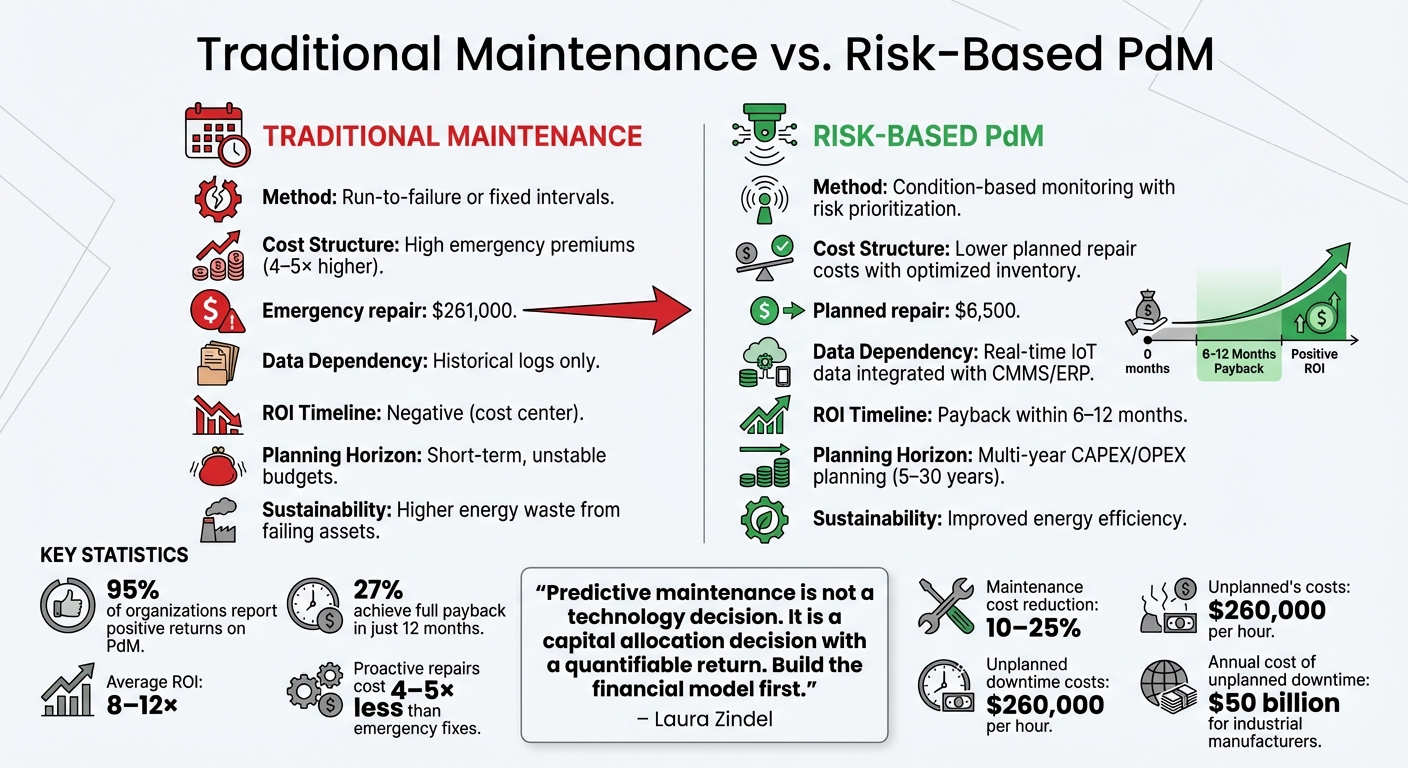
Traditionelle vs. risikobasierte vorausschauende Wartung: Kosten- und ROI-Vergleich
Selbst mit präzisen Fehlermodellen gelingt es Unternehmen oft nicht, die Rendite der vorausschauenden Instandhaltung (PdM) zu maximieren, wenn die Instandhaltung ausschließlich als Betriebsausgabe betrachtet wird. Diese Kluft zwischen den täglichen Wartungsaufgaben und den langfristigen Investitionsstrategien schränkt den Gesamtnutzen ein. Um den Wert von PdM wirklich zu erschließen, müssen die Erkenntnisse aus der Instandhaltung in eine umfassendere Finanzplanung integriert werden.
Kurzfristiges Denken gegenüber langfristiger Planung
Wartungsbudgets werden in der Regel als Betriebskosten (OPEX) eingestuft, während Investitionsausgaben (CAPEX) für den Ersatz von Anlagen separat geplant werden. Dieser isolierte Ansatz führt oft zu einer reaktiven Wartung, die schockierend teuer sein kann. So kann beispielsweise eine Reparatur, die geplant $6.500 kostet, als Notfallreparatur auf $261.000 ansteigen - bis zu 40 Mal teurer [19].
Der finanzielle Tribut, den ungeplante Ausfallzeiten fordern, ist schwindelerregend und kostet die Industriehersteller jährlich schätzungsweise $50 Milliarden [19]. Erschwerend kommt hinzu, dass viele Unternehmen Schwierigkeiten haben, technische Daten in Finanzkennzahlen umzuwandeln, die den Erwartungen des CFO entsprechen. Zum Beispiel können 56% der Unternehmen ihre IoT-Wartungseinsparungen nicht genau quantifizieren [1]. Während 74% der Hersteller die vorausschauende Instandhaltung in Pilotprojekten erprobt haben, ist es nur 26% gelungen, sie über eine einzelne Linie oder Anlage hinaus zu erweitern. [2]. Ohne ein klares Finanzmodell, das Sensordaten mit Kostenvermeidung und aufgeschobenen Investitionsausgaben verknüpft, bleibt PdM oft in der Pilotphase stecken.
"Vorausschauende Wartung ist keine technologische Entscheidung. Es ist eine Entscheidung über die Kapitalallokation mit einer quantifizierbaren Rendite. Erstellen Sie zuerst das Finanzmodell."
Traditioneller PdM vs. risikobasierter Ansatz
Der Hauptunterschied zwischen traditioneller vorausschauender Wartung und einem risikobasierten Ansatz liegt in ihrem Fokus. Herkömmliche Methoden zielen darauf ab, den nächsten Ausfall zu verhindern, während die risikobasierte Planung den gesamten Lebenszyklus der Anlage optimiert, um bessere finanzielle Ergebnisse zu erzielen.
| Merkmal | Traditionelle Wartung | Risikobasiertes PdM |
|---|---|---|
| Methode | Run-to-failure oder feste Intervalle [12] | Zustandsbezogene Überwachung mit Risikopriorisierung [6] |
| Kostenstruktur | Hohe Notfallprämien (4-5x höher) [19] | Niedrigere geplante Reparaturkosten mit optimiertem Bestand [19] |
| Daten-Abhängigkeit | Verlässt sich auf historische Protokolle [18] | Verwendet IoT-Echtzeitdaten integriert mit CMMS/ERP [6] |
| ROI-Zeitleiste | Negativ (Kostenstelle) | Amortisation oft innerhalb von 6-12 Monaten [19] |
| Planungshorizont | Kurzfristige, instabile Budgets [11] | Mehrjährige CAPEX/OPEX-Planung [11] |
| Nachhaltigkeit | Höhere Energieverschwendung durch ausfallende Anlagen [6] | Verbesserte Energieeffizienz [12][6] |
Proaktive Wartung ist weitaus kosteneffizienter, da geplante Reparaturen 4 bis 5 Mal weniger kosten als Notreparaturen. [19]. Darüber hinaus berichten 95% der Unternehmen, die vorausschauende Wartung einführen, über positive Renditen, wobei 27% die volle Amortisation in nur 12 Monaten erreichen. [19]. Unternehmen, die das ROI-Tracking in ihre PdM-Strategien integrieren, erzielen im Durchschnitt eine Rendite von 8-12x [1].
Ein Beispiel ist ein nordamerikanisches Zementwerk, das im Jahr 2024 eine drahtlose PdM-Lösung eingeführt hat. Durch die Erkennung von Materialablagerungen und eines Lagerschadens an einem Abscheidergebläse konnte das Werk $120.000 an Produktionsausfällen und Reparaturkosten vermeiden. Innerhalb von sechs Monaten sparte das Werk $1,1 Millionen und weitete das System anschließend auf andere Standorte aus. [6].
Diese Beispiele verdeutlichen die Notwendigkeit eines integrierten Ansatzes, der kurzfristige und langfristige Planung miteinander verbindet.
Lösung: Verbindung von PdM und Investitionsplanung mit Oxand Simeo™
Oxand Simeo™ schließt die Lücke zwischen den Erkenntnissen der vorausschauenden Instandhaltung und der langfristigen Finanzplanung. Durch die Schaffung einer einheitlichen Plattform, die den Zustand der Anlagen mit finanziellen Entscheidungen verknüpft, wird sichergestellt, dass die Instandhaltung nicht länger als isolierte Ausgabe behandelt wird. Stattdessen fließen die PdM-Daten in die CAPEX- und OPEX-Planung über 5- bis 30-Jahres-Horizonte ein.
Die Plattform simuliert die Leistung von Anlagen im Laufe der Zeit und ermöglicht es Unternehmen, verschiedene Budgetszenarien zu untersuchen, bevor sie Entscheidungen treffen. Dieser risikobasierte Ansatz setzt Prioritäten für Investitionen auf der Grundlage von Faktoren wie der Kritikalität der Anlage, den Lebenszykluskosten, der Einhaltung von Vorschriften und den Auswirkungen auf die Umwelt.
Ein hervorstechendes Merkmal ist die Fähigkeit, vermiedene Kosten - wie Produktionsverluste und Fehlervermeidung - und realisierte Bargeldeinsparungen, wie reduzierte Arbeits- und Ersatzteilkosten, separat zu quantifizieren. Diese Unterscheidung ist entscheidend, wie Laura Zindel erklärt:
"Vermeidete Kosten... erscheinen nicht als Posten in der Gewinn- und Verlustrechnung. Sie sind kontrafaktische Einsparungen... Realisierte Bareinsparungen erscheinen in den Jahresabschlüssen."
- Laura Zindel, Leiterin der Qualitätssicherung, Wiss [19]
Oxand Simeo™ bietet die nötige finanzielle Transparenz, um laufende Investitionen zu rechtfertigen. Es modelliert auch die Energieleistung und die Kohlenstoffreduzierung zusammen mit den Wartungsstrategien und ermöglicht es Organisationen, die gezielten Wartungskosten um 10-25% zu senken und gleichzeitig ihren Kohlenstoff-Fußabdruck zu reduzieren.
"Wir brauchten ein Instrument, mit dem wir die fragmentierten Daten, die wir hatten, konsolidieren und auf eine Weise projizieren konnten, die unseren gewählten Vertretern, die die Entscheidungsträger sind, klar präsentiert werden konnte."
- Geschäftsführender Direktor, Departement Meuse [11]
Oxand Simeo™: Messbarer ROI durch vorausschauende Wartung
Funktionen, die zu Ergebnissen führen
Oxand Simeo™ hebt die vorausschauende Wartung auf die nächste Stufe und bietet einen klaren Weg zu messbarem ROI. Anstatt sich auf teure IoT-Hardware zu verlassen - deren Preis oft zwischen $200 und $500 pro Überwachungspunkt liegt - nutzt die Plattform eine proprietäre Datenbank mit 10.000 Gesetze gegen das Altern und 30.000 Instandhaltungsmaßnahmen Vorhersage der Anlagenverschlechterung und Optimierung von Zeitpunkt und Ort der Eingriffe [11]. Dieser Ansatz macht kostspielige Sensorinstallationen überflüssig und liefert gleichzeitig verwertbare Erkenntnisse.
Ein herausragendes Merkmal ist das Tool zur Simulation von Szenarien, mit dem Unternehmen verschiedene Wartungsstrategien testen können. Durch die Berücksichtigung von Einschränkungen wie Budgets, Servicelevels und Dekarbonisierungszielen identifiziert Simeo Risiken und berechnet ROI-Metriken, bevor Ressourcen zugewiesen werden. Diese vorausschauende Funktion gewährleistet, dass Instandhaltungsentscheidungen sowohl kosteneffizient als auch strategisch fundiert sind.
Beispiele für eine erfolgreiche Umsetzung
Oxand Simeo™ hat bereits für verschiedene Organisationen beeindruckende Ergebnisse geliefert. Zum Beispiel hat die Französisches Ministerium der Streitkräfte nutzte die Plattform zur Verwaltung eines umfangreichen Portfolios von 80.000 Gebäuden mit einer Fläche von 25 Millionen Quadratmetern und einem Wert von etwa $16 Milliarden. Durch die Nutzung von Simeo entwickelte das Ministerium eine 10-Jahres-Investitionsstrategie, die den Instandhaltungsrückstau verringerte und das Asset Management auf der Grundlage objektiver Zustandsdaten rationalisierte. [20].
Eine weitere Erfolgsgeschichte kommt von In'li, ein Immobilienunternehmen. Man ging von reaktiven Reparaturen zu einem vorausschauenden Ansatz mit Simeo über. Der Leiter der Abteilung Budget und Anlagenbewertung berichtete:
"Wir haben uns an Oxand gewandt, weil wir ein Tool brauchten, das uns eine vorausschauende - und nicht nur korrigierende - Sichtweise bietet und uns hilft, unsere Investitionen effektiver zu verwalten. Oxand zeichnete sich durch seine Risikomanagement-Funktionen aus." [11].
Unternehmen, die Simeo einführen, erzielen in der Regel innerhalb von 6 bis 12 Monaten einen messbaren ROI, wobei sich die Investition oft schon im ersten Budgetzyklus amortisiert. Die Wartungskosten werden um 10-25% gesenkt, während sich die Energieleistung verbessert - was sowohl finanzielle als auch betriebliche Vorteile mit sich bringt. [11].
Diese Ergebnisse aus der Praxis zeigen, wie Simeo Unternehmen dabei hilft, unmittelbare Vorteile zu erzielen und gleichzeitig die Grundlage für einen nachhaltigen Wert zu schaffen.
Langfristiger Wertaufbau
Oxand Simeo™ beschränkt sich nicht auf kurzfristige Gewinne. Es integriert die Erkenntnisse der vorausschauenden Instandhaltung in die langfristige CAPEX- und OPEX-Planung und stabilisiert die Investitionsstrategien über Zeiträume von 5 bis 30 Jahren. Durch die Ermittlung des idealen Zeitpunkts für Wartung und Erneuerung minimiert die Plattform die Ausgaben für Notfälle und priorisiert kosteneffiziente, geplante Eingriffe. Dadurch werden die Gesamtbetriebskosten gesenkt und die Lebensdauer der Anlagen verlängert.
Darüber hinaus enthält Simeo auf Nachhaltigkeit ausgerichtete Module, die Instandhaltungsaktivitäten mit Energieeffizienz- und Dekarbonisierungszielen in Einklang bringen. Dadurch wird die Instandhaltung von einer reaktiven Ausgabe zu einem strategischen Instrument zur Verbesserung der finanziellen Ergebnisse und der Umweltauswirkungen. Mit diesen Funktionen stellt Oxand Simeo™ sicher, dass die vorausschauende Instandhaltung nicht nur einen ROI liefert, sondern auch die langfristige Wertschöpfung fördert.
Schlussfolgerung: PdM-Herausforderungen in Ergebnisse umwandeln
Die vorausschauende Instandhaltung gerät oft ins Stocken, wenn sie als ein weiteres technisches Projekt und nicht als eine kalkulierte Investition betrachtet wird. Wie wir herausgefunden haben, ist es zur Erzielung einer messbaren Rendite erforderlich, die Instandhaltungsstrategien an den allgemeinen Unternehmenszielen auszurichten und gleichzeitig häufige Hürden wie falsch gesetzte Prioritäten, fragmentierte Daten, fehlerhafte Fehlermodelle und eine unzusammenhängende Finanzplanung zu überwinden.
Das ist die Realität: 95% der Unternehmen berichten über positive Ergebnisse der vorausschauenden Wartung. Proaktive Reparaturen sind 4 bis 5 Mal billiger als Notreparaturen. Dennoch, trotz dieser, 72% der IoT-Pilotprojekte liefern keinen ROI innerhalb des ersten Jahres, oft, weil sie sich auf isolierte Dashboards verlassen, die keine verwertbaren Erkenntnisse liefern [1][19][10]. Der Schlüssel zum Erfolg liegt im Einsatz von Technologie zur Unterstützung von Entscheidungen, die sowohl umsetzbar als auch finanziell solide sind.
"Vorausschauende Wartung ist keine technologische Entscheidung. Es ist eine Entscheidung über die Kapitalallokation mit einer quantifizierbaren Rendite. Erstellen Sie zuerst das Finanzmodell."
- Laura Zindel, Leiterin der Qualitätssicherung, Wiss [19]
Erfolgreiche Unternehmen verfolgen bei der Investitionsplanung einen risikobasierten Ansatz, der sicherstellt, dass prädiktive Erkenntnisse direkt in die CAPEX- und OPEX-Planung integriert werden. Dadurch wird die Instandhaltung von einer reaktiven Ausgabe zu einem strategischen Vermögenswert, der die Gesamtbetriebskosten um 10-25% senkt, die Lebensdauer der Anlagen verlängert und hilft, Umweltziele zu erreichen. [11]. Durch die Einbindung der vorausschauenden Wartung in die strategische Finanzplanung können Unternehmen Ergebnisse erzielen, die sowohl messbar als auch wirkungsvoll sind.
Die eigentliche Herausforderung besteht nicht darin, ob vorausschauende Instandhaltung funktionieren kann, sondern darin, ob Ihr Unternehmen bereit ist, sich nicht nur mit der Technologie um ihrer selbst willen zu beschäftigen. Der Erfolg liegt in der Verbindung der richtigen Daten, Modelle und Planungstools, um skalierbare und überprüfbare finanzielle Ergebnisse zu erzielen [1]. Wenn sie richtig gemacht wird, entwickelt sich die vorausschauende Wartung von einem hoffnungsvollen Versprechen zu einem bewährten, quantifizierbaren Ergebnis. Beginnen Sie noch heute und machen Sie die vorausschauende Instandhaltung zu einem Eckpfeiler Ihrer Unternehmensstrategie.
FAQs
Mit welchen Vermögenswerten sollten wir beginnen, um schnell einen ROI zu erzielen?
Fokussierung auf Vermögenswerte mit hohe Ausfallkosten, wesentliche Rollen, oder intensive Nutzung kann zu einer schnelleren Amortisierung der Investition führen. Denken Sie an kritische Produktionsmaschinen, unentbehrliche Geräte oder Gegenstände, die zu häufigen Ausfällen neigen. Die Priorisierung dieser Arten von Anlagen ermöglicht spürbare Verbesserungen und schnellere Ergebnisse.
Welche Daten müssen integriert werden, damit PdM funktioniert?
Damit die vorausschauende Wartung effektiv funktioniert, müssen verschiedene Datentypen kombiniert werden. Dazu gehören Ausfallhistorie, Sensormesswerte, und Details aus Systemen wie SCADA, PLCs, CMMS, und ERP. Die Zusammenführung all dieser Faktoren gewährleistet einen reibungslosen Datenfluss und hilft, präzise Erkenntnisse zu gewinnen.
Wie können wir den ROI von PdM für die Finanzierung in Dollar nachweisen?
Um den Return on Investment (ROI) der vorausschauenden Instandhaltung in Dollar zu beziffern, ist ein strukturierter finanzieller Ansatz unerlässlich. Beginnen Sie damit, die Einsparungen zu quantifizieren, die durch weniger ungeplante Ausfallzeiten, geringere Wartungskosten, und längere Lebensdauer der Anlagen. Verwenden Sie finanzielle Echtzeit-Tracking-Tools und Dashboards, um diese Berechnungen mit klaren, messbaren Daten zu untermauern. Die fortlaufende Überwachung spielt eine wichtige Rolle, um sicherzustellen, dass die Ergebnisse mit den finanziellen Zielen übereinstimmen, und hilft, den ROI im Laufe der Zeit zu bestätigen.