

100+
Organisations trust Oxand
10%+
Increase in asset availability
6–12 months
Typical ROI horizon
Audit-ready
Safety regulator evidence
25 years
Of asset expertise
Generation, transmission, distribution. Plan multi-year capital programmes that hold up under PUC scrutiny, hit SAIDI and SAIFI targets, and integrate the DER and EV load reshaping your grid.
is the software-supported discipline used by generation owners and T&D operators to prioritise multi-billion-dollar capital programmes — substation renewals, line replacements, smart-meter rollouts, DER integration, generation retirements — under regulatory revenue caps. AIP analyses asset condition, risk of failure, reliability impact (SAIDI/SAIFI), carbon footprint, and financial constraints to produce a defensible multi-year investment plan. According to the Gartner Market Guide for Asset Investment Planning Solutions (G00781827, December 2024), 67% of utility respondents already deploy AIP in some form of cloud.
Wood poles, overhead lines, substation transformers in service for 40–60 years. Failure consequence is uneven and weather-correlated.
Without an evidentiary trail back to asset-level condition data, regulators reject CAPEX requests or impose lower revenue caps.
Distributed solar, batteries, EV charging fundamentally change load shape. Plans built on historical demand forecasts are already obsolete.
Storms, wildfire, heat events — historical SAIDI baselines understate forward risk. Reliability investment has to be modelled forward, not backward.
Veteran planning engineers retiring with the asset model in their heads. Decision logic has to live in the platform, not in their notebooks.
Generation retirement schedules colliding with reliability needs. The 2035 commitment has to coexist with tonight's load.
Poles, lines, transformers, switchgear, substations, generation units. Consolidate field condition from Simeo GO mobile inspections, CMMS and GIS into a single planning model — then visualise condition, risk and renewal value across the grid on interactive maps. Bulk import in days, not months.
10,000+ predictive degradation models calibrated to power-asset families — risk weighed as probability × consequence on service, not age alone. Simulate multi-year CAPEX trajectories under budget, reliability and carbon constraints, and compare scenarios side by side at asset level. See exactly which substation slips under each budget scenario and what reliability cost it carries.
Living plans that update as field reality changes. Every recommendation carries its evidence chain — asset, condition data, model, cost base — in the formats regulators actually ask for: PUC rate-case filings, SAIDI / SAIFI reliability reporting, and the price-control reviews run by Ofgem, CRE, ARERA and BNetzA. The ISO 55001-aligned audit trail is generated from the live model, not reassembled after the fact.
IBM Maximo, Infor EAM, CARL Software, SAP PM. Condition data flows in; strategic priorities flow out.
SAP and Oracle ERP. Financial data and procurement integrated with the multi-year capital plan.
Spatial and building-information data ingested to anchor asset risk to geography and structure.
Real-time telemetry from SCADA and IoT sensors feeds asset condition directly into the investment model.
Open API layer for custom integrations. Connect any source system without bespoke middleware.
Simeo is hosted on Azure (France region by default), keeping data within the EU for organisations under GDPR or national-security requirements. A fully self-hosted Kubernetes deployment is available for operators under air-gapped or critical national infrastructure constraints.
Evidence-backed CAPEX justification. Asset-level traceability from condition data to dollar request. Defensible under regulator cross-examination.
5–30 year reinforcement, replacement, and reliability programmes. DER integration scenarios. Substation renewal prioritisation.
Decarbonisation pathway alongside SAIDI commitments and revenue caps. See where the trade-offs bite.

“Expert opinion used to settle it. Today every investment decision is factual and quantified — and no one can reduce it to assumptions any more.”
Renaud Blanc — Asset Management Engineer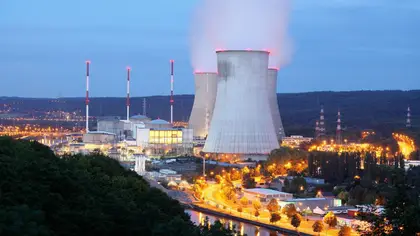
Help Electrabel extend the lifespan of 50 critical structures by 10 years through smarter asset management and optimized maintenance across two sites.
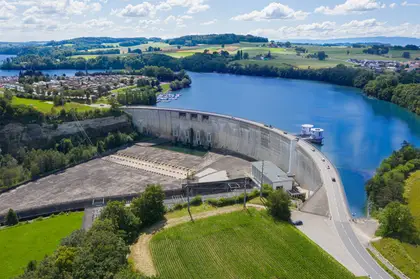
Optimise the value of the hydroelectric developments at the end of concession, and centralise the master plans of every business sector of the Direction Énergie…
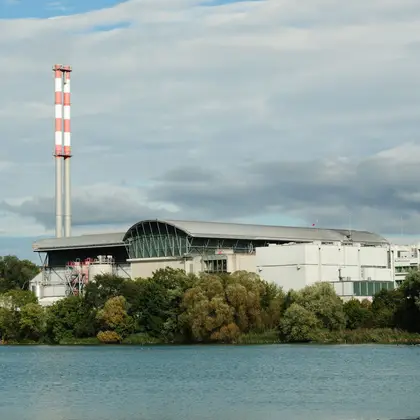
Harmonise and consolidate asset management within each domain and between them, and hold a decision-support tool for prioritised five-year project plans, readab…

“Each territory used to defend its own priorities with no shared reference. Today works are arbitrated on objective criteria that everyone shares — and the budget is committed where…”
Stéphane LASERRE — Deputy Director of Project Management
“As asset leader, I'm aware of the need to challenge our practices and be at the top level of operation and maintenance practices. Within this context, we want as a first step to pe…”
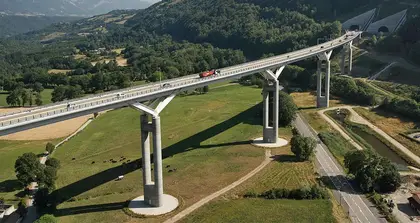
“A solution that connects the technical teams, the finance teams and executive management alike”
Xavier Rigo — Deputy CEO, APRR
“We turned to Oxand because we needed a tool that would provide us with a predictive—not just corrective—view and help us manage our investments more effectively. Oxand stood out fo…”
Laura Stolz — Head of Budget and Asset Valuation Department
“We needed a tool that would allow us to consolidate the fragmented data we had and project it in a way that could be clearly presented to our elected officials, who are the decisio…”
Dominique VANON — Chief Executive Officer (General Director of Services)
“What we do not measure, we can neither steer nor put a value on. An estate is not a fixed inheritance, it is a living asset to be developed with intent. Simeo helps us answer a sim…”
Cyril Touboul — Technical and Works Director
“Our spreadsheets gave us totals, never a picture of risk. With Simeo the wear and obsolescence of our equipment become visible and quantified: the investment we ask for is no longe…”
Eric Melet — Deputy DirectorOxand is named as a representative vendor in the Gartner Market Guide for Asset Investment Planning Solutions (G00781827, December 2024). The guide identifies AIP as a distinct software category used by asset-intensive organisations to prioritise capital investment across the asset life cycle.
Yes. Simeo's evidence trail aligns with the documentation US Public Utility Commissions expect — asset register, condition assessments, predictive model output, action library, and the multi-year capital plan that ties them together. The same model supports EU regulatory filings (Ofgem, CRE, ARERA, BNetzA).
DER penetration and EV load are scenario inputs that reshape the multi-year investment plan — substation upgrade timing, line capacity, voltage management. You can simulate aggressive DER scenarios alongside conservative ones and see the asset-level impact.
Yes — via REST and GraphQL APIs. Field condition and reliability events feed into the model; strategic plan feeds out to operational prioritisation and CMMS work-order generation.
Yes. Simeo offers a fully self-hosted Kubernetes deployment for utilities under air-gap, national-security, or strict data-isolation constraints. The default option is the Azure France region (EU residency, ISO 27001, NIS2-aligned).
Simeo, Copperleaf, and Cosmo Tech are all native AIP platforms named in the Gartner Market Guide for AIP (G00781827, December 2024). Brightly is primarily an EAM with adjacent AIP capabilities.
One walkthrough on your substations, your SAIDI targets, your rate-case timeline.
GARTNER is a registered trademark and service mark of Gartner, Inc. and/or its affiliates and is used herein with permission. All rights reserved. Gartner does not endorse any vendor, product or service depicted in its research publications.