

100+
Organisations trust Oxand
10%+
Increase in asset availability
6–12 months
Typical ROI horizon
AMP-ready
Regulatory evidence
25 years
Of asset expertise
Mains, treatment plants, pumping stations, sewer networks. Build the multi-year plan that justifies your CAPEX and meets the regulator's resilience and water-quality bar.
is the discipline used by water and wastewater operators to prioritize multi-year capital programmes — main replacement, plant refurbishment, network extension, sewer rehabilitation — under regulatory price reviews and resilience expectations. AIP combines asset condition, failure forecasts, and consequence weighting to produce a defensible, multi-year CAPEX plan. According to Gartner’s Market Guide for AIP Solutions (December 2024), water and power are among the earliest adopters of AIP because of their expanding asset base and stringent regulatory requirements.
The mains underground are decades old, condition data is patchy, and digging to inspect is expensive. Decisions still have to defend themselves.
Leaks, theft, and metering inaccuracy erode revenue. Investment in detection and replacement competes with treatment-plant CAPEX.
AMP cycles (UK), PFAS and lead service line replacement (US), urban wastewater directive compliance (EU) — every cycle ratchets the bar higher.
Drought, flood, and storm-surge resilience now shape investment priorities as much as historical condition.
Pumping is energy-intensive. Net-zero commitments collide with treatment quality and resilience needs.
Engineering teams holding the network model in tribal knowledge are aging out. The decision logic has to live in the platform.
Mains, treatment plants, pumping stations, sewer networks. Consolidate field condition from Simeo GO mobile inspections, CMMS and GIS into a single planning model — then visualise condition, risk and renewal value across the network on interactive maps. Bulk import in days, not months.
Run 5, 10 and 20-year scenarios under budget, reliability and net-zero constraints simultaneously — AMP cycle by AMP cycle. Compare strategies side by side before committing capital. Institutional knowledge is encoded in 10,000+ predictive models covering every water-asset family, so it does not leave with the senior engineer.
Living plans that update as field reality changes. Every action links to the asset, the condition data, the model, the regulatory line item. CMMS integration keeps field execution flowing back to the model and strategic plan flowing forward to work-order prioritisation. ISO 55001 and AMP submission-ready.
CMMS integration partner: CARL Software — field execution flows back to the model; strategic plan flows forward to work-order prioritisation.
IBM Maximo, Infor EAM, CARL Software, SAP PM. Condition data flows in; strategic priorities flow out.
SAP and Oracle ERP. Financial data and procurement integrated with the multi-year capital plan.
Spatial and building-information data ingested to anchor asset risk to geography and structure.
Real-time telemetry from SCADA and IoT sensors feeds asset condition directly into the investment model.
Open API layer for custom integrations. Connect any source system without bespoke middleware.
Simeo is hosted on Azure (France region by default), keeping data within the EU for organisations under GDPR or national-security requirements. A fully self-hosted Kubernetes deployment is available for operators under air-gapped or critical national infrastructure constraints.
AMP-cycle-ready evidence. Asset-level CAPEX justification. Defensible under regulator scrutiny. Every action links to the asset, condition data, model, and regulatory line item.
Main replacement, sewer rehabilitation, network extension. Multi-decade scenarios modelled under budget and risk constraints so the highest-consequence work gets funded first.
Pumping carbon, treatment energy, climate adaptation. Simeo shows where the trade-offs bite at the asset level — so decarbonisation and resilience targets sit inside the same plan.

Advise on decomposition of tunnels Creating logical clusters for maintenance planning
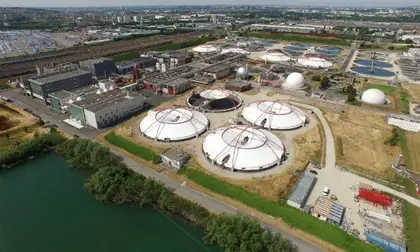
Help SIAAP optimize investments and maintenance by using Oxand Simeo to centralize data, predict aging, and communicate asset condition effectively.
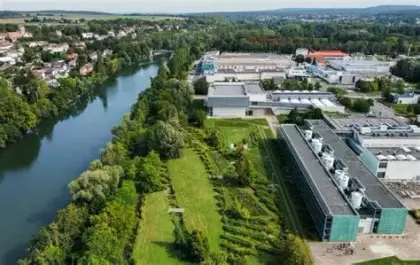
The Syndicat des Eaux d'Île-de-France (SEDIF), a public body created in 1923, is the largest public water service in France and Europe, supplying drinking water…

Support Le Havre Seine Métropole in anticipating asset aging, optimizing investments, and ensuring resilient water services for 270,000 residents.

Help Eau d’Azur build a unified, data-driven asset reference system to optimize management, sustainability, and long-term value of its water infrastructure.

How to regain visibility and control over a drinking-water asset portfolio managed by a delegate?

Enable Eau de Paris to unify its asset data, streamline management, and justify investments for efficient, sustainable service to 6 million users daily.
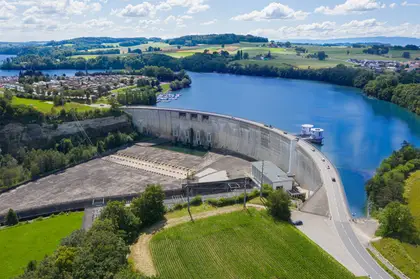
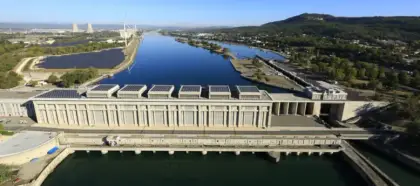
Optimise the value of the hydroelectric developments at the end of concession, and centralise the master plans of every business sector of the Direction Énergie…
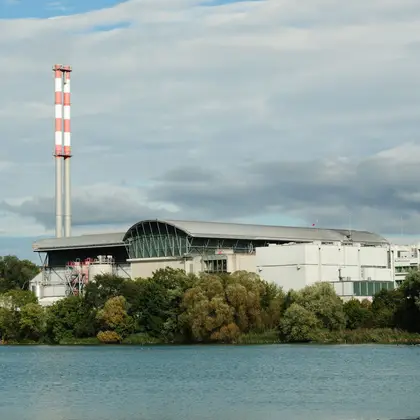
Harmonise and consolidate asset management within each domain and between them, and hold a decision-support tool for prioritised five-year project plans, readab…
“Expert opinion used to settle it. Today every investment decision is factual and quantified — and no one can reduce it to assumptions any more.”
Renaud Blanc — Asset Management Engineer
“Each territory used to defend its own priorities with no shared reference. Today works are arbitrated on objective criteria that everyone shares — and the budget is committed where…”
Stéphane LASERRE — Deputy Director of Project Management
“As asset leader, I'm aware of the need to challenge our practices and be at the top level of operation and maintenance practices. Within this context, we want as a first step to pe…”
Oxand is named as a representative vendor in the Gartner Market Guide for Asset Investment Planning Solutions (G00781827, December 2024). The guide identifies AIP as a distinct software category used by asset-intensive organisations to prioritise capital investment across the asset life cycle.
Most water utilities start with patchy condition data. Simeo's predictive models infer condition from age, material, soil, pressure, and burst history — so you get a defensible risk view immediately, then refine as inspection data flows in.
Yes. The audit-ready evidence trail — asset register, condition data, predictive model output, action library, multi-year plan — aligns with the documentation regulators expect. Same logic supports EU UWWTD and US PFAS / lead service line filings.
Yes. NRW reduction (leak detection, district metering, mains replacement) competes head-to-head with treatment and source CAPEX in the same scenario engine.
Simeo ingests data from major hydraulic and SCADA systems via REST/GraphQL APIs. Integration patterns documented per system.
Default: Azure France region (EU residency, ISO 27001, NIS2-aligned). For utilities under strict isolation requirements: fully self-hosted Kubernetes deployment.
One walkthrough on your assets, your data, your regulatory regime. No prep needed.
GARTNER is a registered trademark and service mark of Gartner, Inc. and/or its affiliates and is used herein with permission. All rights reserved. Gartner does not endorse any vendor, product or service depicted in its research publications.