

Context
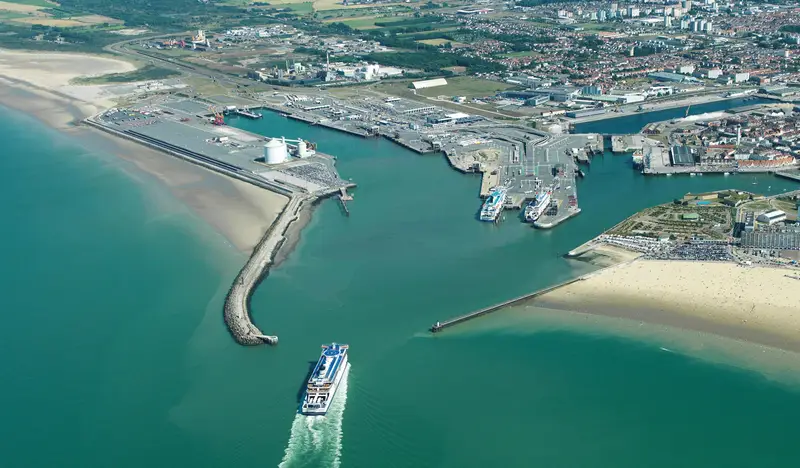
In 2015 the Société des ports du Détroit was awarded the design, construction and operation of the Calais Port 2015 extension, for fifty years: 450,000 m² of polder and 3 km of sea wall, at Europe's leading passenger port, which handles some 10 million travellers a year. A concession running to 2065 changes what maintenance means. Every renewal decision has to hold over half a century, and the profitability of the assets across the concession depends on when that renewal falls.
Our solution
- 01 Break the port estate down A robust functional breakdown of the port's assets, from the quays and the sea wall through to the hangars.
- 02 Map the risks Risk mapped across the estate, and its evolution projected over fifty years on ageing laws written for port infrastructure and for buildings.
- 03 Build the renewal plan An optimised maintenance and renewal action plan over fifty years, aligned with ISO 55001.
- 04 Deploy Simeo inside SPD Oxand Simeo™ deployed at SPD so the heavy-maintenance and renewal plan is built dynamically rather than fixed once and left.
What Oxand delivered
Renewal priced across the concession
The heavy maintenance and renewal bill projected across the fifty years of the concession, so profitability is steered rather than discovered.
Maintenance led by risk
An effective risk-based maintenance management method, applied to port infrastructure and buildings alike.
A plan aligned with ISO 55001
A multi-year roadmap of optimised actions, built to the asset management standard.
Ageing expertise alongside the team
Specialists in infrastructure and building ageing working with SPD, with the experience of industrial asset managers behind the method.
Questions about this reference
What is Calais Port 2015?
The extension of the port of Calais: 450,000 m² of polder and 3 km of sea wall. The Société des ports du Détroit was awarded its design, construction and operation in 2015, under a concession running to 2065.
Why plan maintenance over fifty years?
Because the concession lasts that long. A renewal deferred in year eight is paid for in year thirty, and the profitability of the assets across the concession depends on when each intervention falls — which only a multi-year model can show.
What does the functional breakdown do?
It turns a port into something that can be planned: quays, sea wall, hangars and equipment described as asset families to which ageing laws, costs and risks can be attached.
How is risk projected over that horizon?
Risk is mapped across the estate, then projected over fifty years on ageing laws written for port infrastructure and for buildings — a sea wall and a hangar do not age the same way, and the plan reflects that.
What does SPD hold at the end?
An optimised maintenance and renewal plan over fifty years, aligned with ISO 55001, and Oxand Simeo™ deployed inside the organisation so the plan is rebuilt as conditions change rather than frozen at handover.