

Context
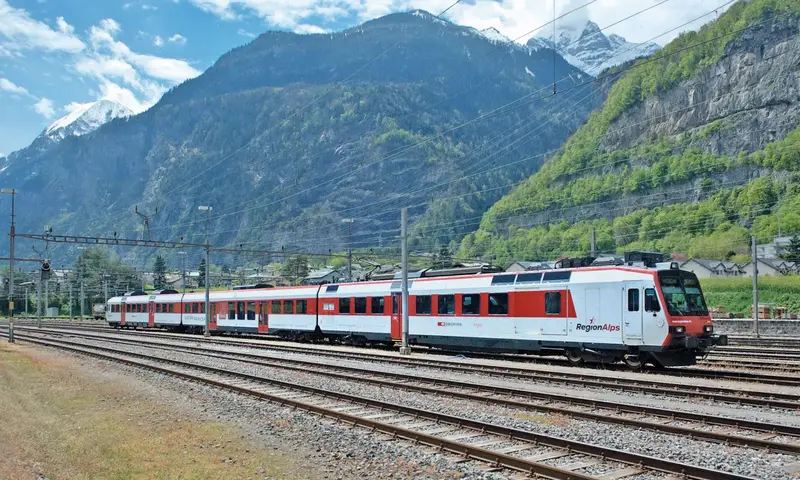
Transports de Martigny et Régions (TMR) operates two Alpine railway lines out of Martigny, in the Swiss canton of Valais: the Mont-Blanc Express towards Châtelard and the French border, and the Saint-Bernard Express towards Orsières and Le Châble — some 44 km of line in mountain terrain, carried by engineering structures and track equipment that age under demanding conditions. TMR set out to strengthen its asset management practices, digitise its estate, optimise its maintenance and investment budgets over the short, medium and long term, test different maintenance strategies, and hold a decision-support tool with which to negotiate budgets with the Swiss Federal Office of Transport (FOT).
Our solution
- 01 Structure the data Inventory, condition and cost data consolidated into the base the master plan rests on.
- 02 Follow the structures at sub-component level The major engineering structures tracked at the level where ageing actually happens.
- 03 Model the asset lifecycles Costs, ageing laws and the influence of maintenance, attached to each asset family.
- 04 Simulate the scenarios Budget and maintenance-strategy scenarios simulated with Oxand Simeo™.
What Oxand delivered
Budgets that can be defended
Budget needs optimised over the short, medium and long term — commissioning, maintenance and renewal — on a basis that can justify additional budget requests to the FOT.
One referential for the estate
Data and inventory centralised in a single referential shared by the teams.
Scenarios instead of a single answer
Budget scenarios compared and the impact of each possible maintenance strategy characterised before the decision is taken.
Questions about this reference
What does TMR operate?
Two Alpine railway lines out of Martigny, in the Swiss canton of Valais: the Mont-Blanc Express towards Châtelard and the French border, and the Saint-Bernard Express towards Orsières and Le Châble — some 44 km of line in mountain terrain, alongside its road services.
What did TMR set out to do?
To strengthen its asset management practices, digitise its estate, optimise its maintenance and investment budgets over the short, medium and long term, and hold a decision-support tool with which to negotiate budgets with the Federal Office of Transport.
What makes these lines demanding to maintain?
They are Alpine lines: the Mont-Blanc Express has been in service since 1906, climbs gradients of up to 20% on its rack sections, and the two lines run on two different gauges. Engineering structures and track equipment age under those conditions, which is exactly what the master plan has to anticipate.
Why follow the structures at sub-component level?
Because a bridge does not age as one object: its deck, bearings and protection equipment each age at their own pace. Following the major structures at that level means the model tracks what actually degrades — and the maintenance plan intervenes on it at the right time.
What does TMR hold at the end?
A maintenance and investment master plan whose budget needs are objectivised, an estate digitised in a single referential, and the ability to compare budget scenarios and characterise the impact of each possible maintenance strategy.