

Context
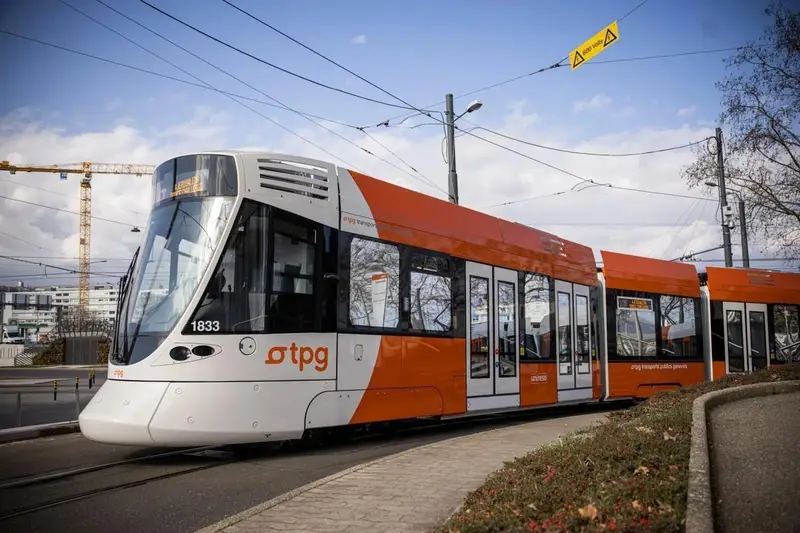
Transports publics genevois (TPG) operates Geneva's public transport network, including some 33 km of tramway and 30 km of trolleybus lines. Behind the vehicles sits a fixed infrastructure of contact lines, traction power systems and track that has to be maintained and renewed over decades — and that keeps growing as the network extends. TPG set out to build a maintenance and investment master plan (PDMI) for the fixed infrastructure of its tramway, trolleybus and electric bus networks, future extensions included, and to hold a decision-support tool with which budgets can be negotiated, maintenance strategies tested, and the impact of each decision on the performance and substance of the network read over the short, medium and long term.
Our solution
- 01 Model the network architecture Contact lines, traction power systems, track and the other fixed installations, modelled in Simeo.
- 02 Model the asset lifecycles Costs, ageing laws and the influence of maintenance, attached to each asset family.
- 03 Evaluate track condition The condition of the track evaluated from a measurement campaign, and the inventory unified on a metric referential.
- 04 Cover the future network Future extensions taken into account, so the plan covers what the network will become.
- 05 Simulate the scenarios Budget and maintenance-strategy scenarios simulated with Oxand Simeo™.
What Oxand delivered
Budgets that can be defended
Budget needs optimised over the short, medium and long term — commissioning, maintenance and renewal — on a basis that can justify additional budget requests.
One referential for the estate
Data and inventory centralised in a single referential shared by the teams.
Scenarios instead of a single answer
Budget scenarios compared and the impact of each possible strategy characterised before the decision is taken.
Questions about this reference
What network does TPG operate?
Geneva's public transport network, including some 33 km of tramway and 30 km of trolleybus lines, alongside its bus services — and behind the vehicles, the fixed infrastructure of contact lines, traction power and track this work addresses.
What did TPG set out to do?
To analyse the maintenance and renewal needs of its fixed tramway, trolleybus and electric bus infrastructure, future network extensions included, and to hold a decision-support tool with which budgets can be negotiated and maintenance strategies tested.
What is a maintenance and investment master plan (PDMI)?
A multi-year plan that sets out, over the short, medium and long term, the maintenance and renewal an infrastructure needs and the budgets that carry it — so investment discussions rest on the modelled condition of the network rather than on the calendar.
How was the condition of the network established?
The network architecture was modelled — contact lines, traction systems, track — with lifecycle models attaching costs, ageing laws and the influence of maintenance to each family. The condition of the track itself was evaluated from a measurement campaign, and the inventory was unified on a metric referential.
Are the future extensions of the network part of the plan?
Yes. The plan takes the network's future extensions into account, so the maintenance and investment trajectory covers what the network will become rather than freezing it as it is today.